Case Incident Investigation Report
July 22, 2026
Using Wireshark for Root Cause Analysis and Remediation of a Local Area Home Network Disruption

Disclaimers
- I am not a professional in these fields. But documenting and figuring out solutions in these findings could help me learn and deepen my knowledge.
- This is not a school project, although some of these tools I learned from school and with the help and guidance of AI, meaning I carefully analyze my prompts and give context and constructive feedback to AI tools so it could guide me and help me learn.
- There will be a highlight indicator
like thisin which it will highlight any commands used in this case. - To safeguard private network details, some specific octets of the IP addresses and MAC addresses displayed in this report have been partially masked using asterisks (*).
1. Overview
On July 22, 2026, one of our home networks went down. Phones and laptops got stuck trying to connect, and the Wi-Fi extender upstairs started blinking red; its way of saying something had broken.
Digging into the traffic with Wireshark turned up the real problem: my workstation and the extender ("Alien") were both trying to claim the exact same local address, 192.168.1.*, at the same time. When two devices fight over the same address like that, the network loses track of who's who; new devices can't get assigned an address of their own, and everything connected through that extender gets cut off.
The fix turned out to be simple: power-cycling the router and both extenders to clear out the stale address records. Once everything came back up, the extender grabbed a clean, unique address (192.168.68.***) and the network settled back to normal; no more conflict, no more red light.
2. Environment and Network Topology
The environment consists of a multi-node wireless extension architecture:
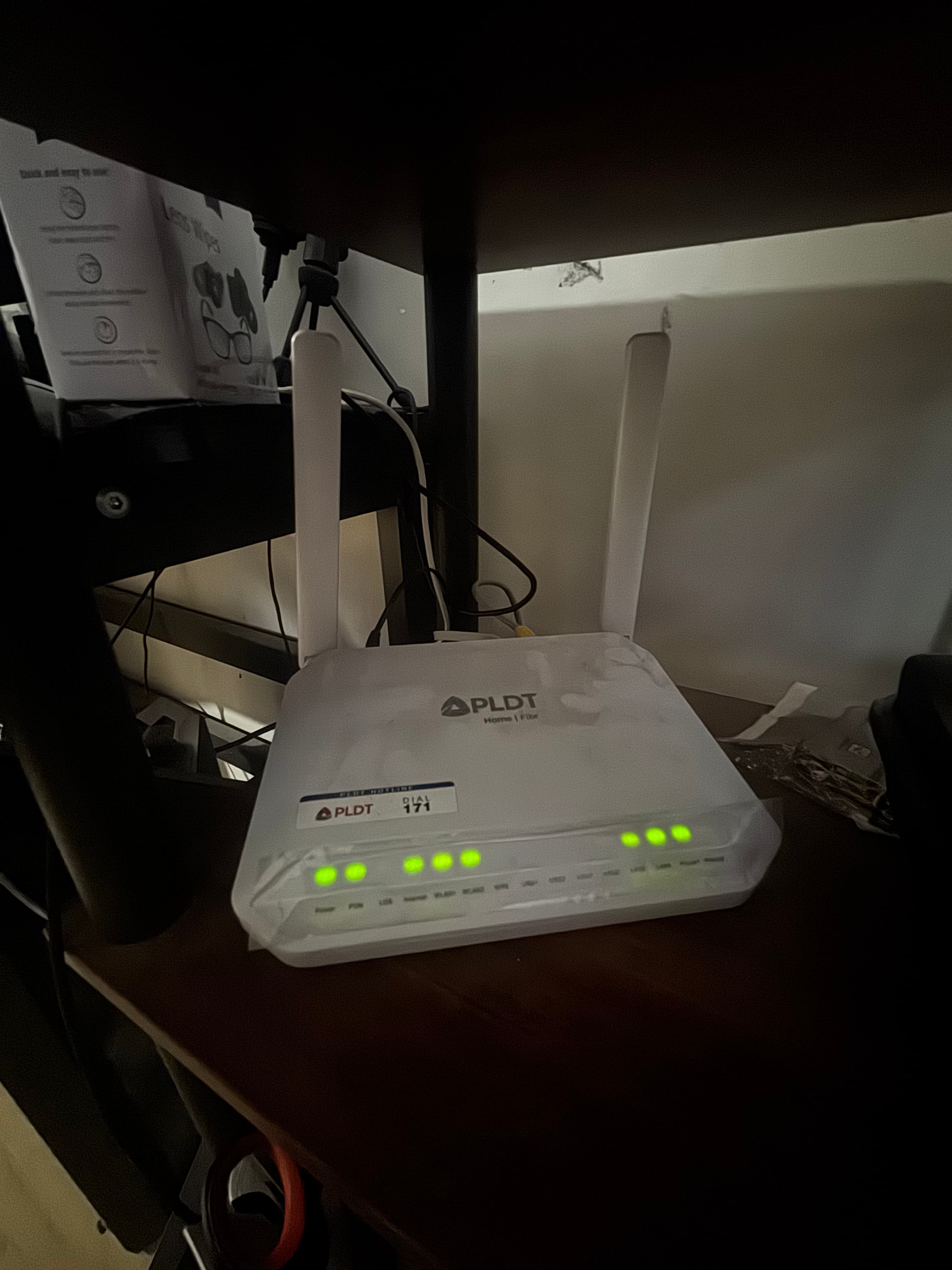
- Primary Internet: 1 PLDT WiFi FiberHome Router acting as the primary DHCP server, NAT gateway, and DNS forwarder.
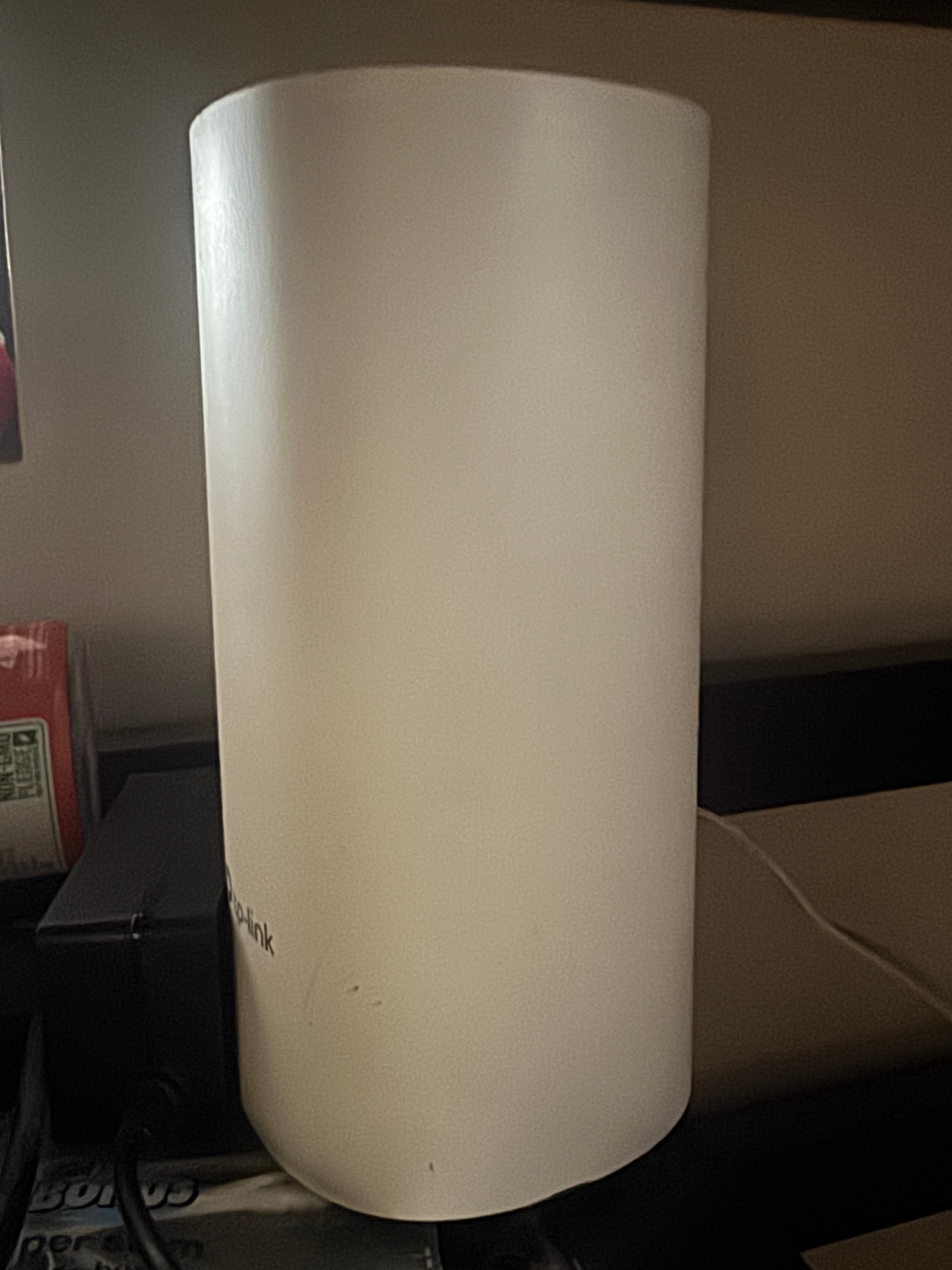
- Primary Extension Node ("Alien"): 1 TP-Link WiFi Repeater positioned inside the primary room, adjacent to the PLDT router. "Alien" is the name that shows up in WiFi settings when connecting to this repeater.
- Secondary Extension Node: 1 TP-Link WiFi Repeater positioned in the upper living room, relaying signal to distant endpoints.
- Our Endpoints: multiple workstation, mobile, and guest devices connecting dynamically over 2.4GHz / 5GHz.
Sanitization Note: all public WAN IP addresses, external routing tables, and pre-shared keys have been redacted or omitted to protect private network credentials. Local private IP addresses reflect the actual captured environment states.
3. Tools and Key Findings
Tools used:
- Wireshark v4.x: packet sniffing, display filtering, protocol hierarchy evaluation, and Expert Information analysis.
- macOS command line utilities: Terminal (
ipconfig getifaddr en0/en1) for local socket and routing verification.
4. Symptom and Initial Isolation
- User symptom: multiple client endpoints, including mobile devices and secondary laptops, failed to establish internet connectivity. They stayed stuck in an "Obtaining IP Address" loop or showed a Wi-Fi icon with no connection.
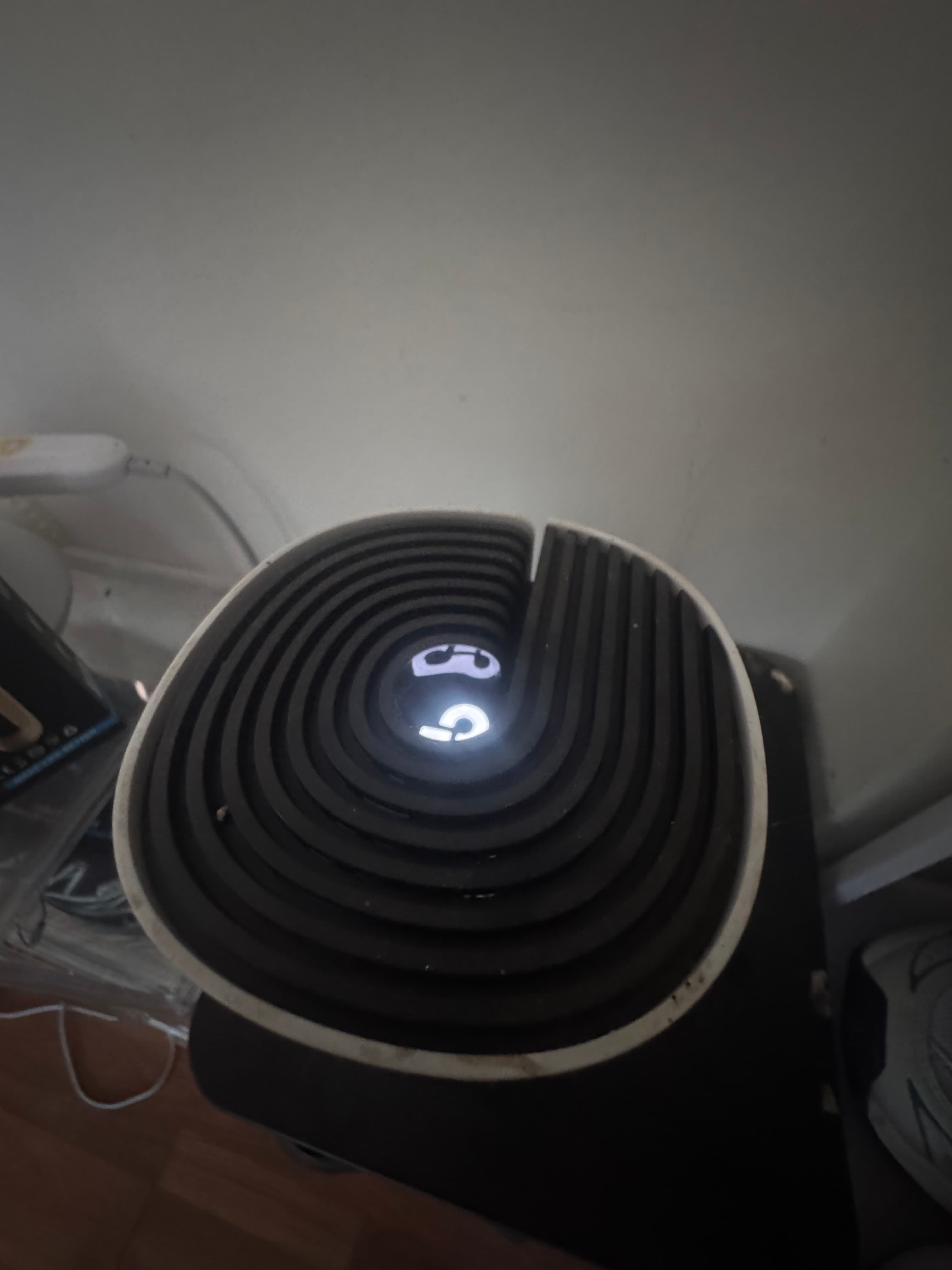
- Hardware indicator: the TP-Link repeater in the upper living room displayed a red LED, indicating complete loss of wireless backhaul to the root gateway.
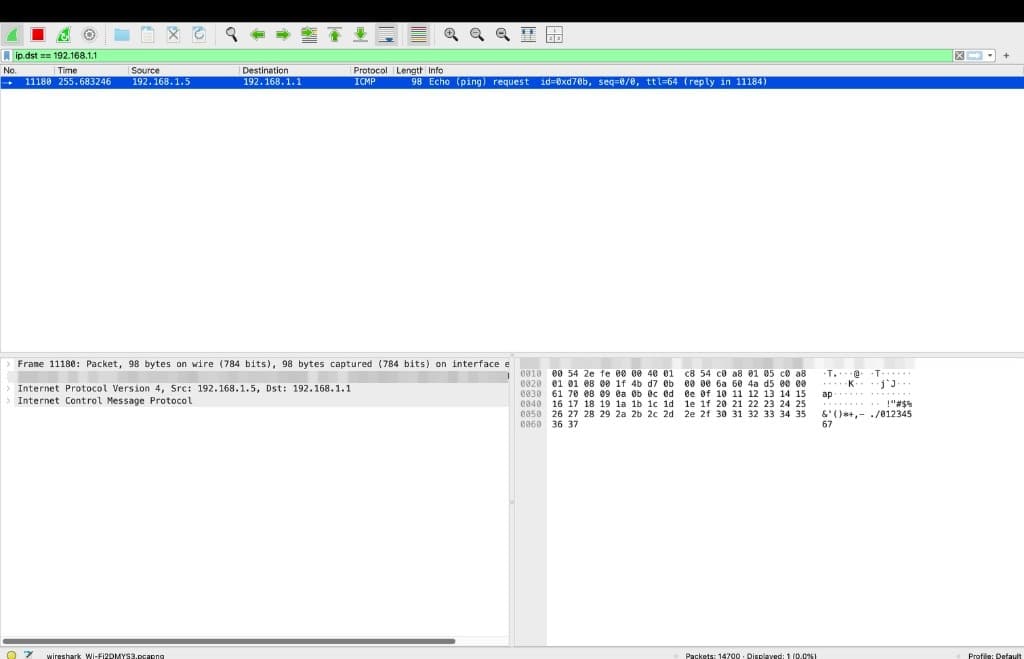
- Local endpoint check: gateway reachability was verified with ICMP echo requests to the default gateway (
192.168.1.1*). Basic pings succeeded, but broader network stability degraded rapidly under simultaneous web requests.
5. Use of Wireshark for Evidence Gathering
The investigation began by capturing live packets on the active wireless interface (en0 / Wi-Fi) and applying incremental display filters to isolate the anomalous behavior.
Step 1: Evaluating workstation inbound traffic
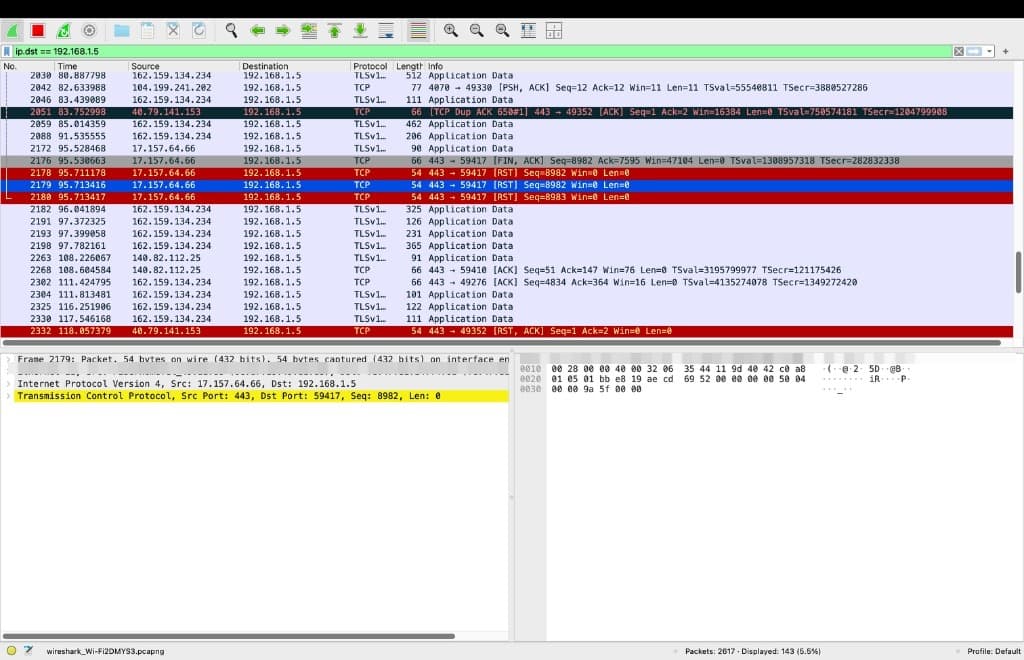
To inspect incoming packets sent to the local endpoint, the following filter was executed: ip.dst == 192.168.1.5*. This filters for all incoming data addressed to my machine, to see whether external servers can reach it or whether connections are being dropped and reset ([RST]).
Observation: Wireshark logged numerous TCP anomalies, specifically TCP Resets ([RST]) and Duplicate Acknowledgments ([TCP Dup ACK]); multiple external servers (e.g. Apple, Microsoft endpoints) were terminating connections abruptly due to lost state tracking.
Step 2: Isolating extender hardware traffic
To inspect flows generated by or directed to the TP-Link extender, a hardware MAC address filter was applied: eth.addr == 12:3e:cc:ba:**:**. This isolates every packet tied to the repeater's MAC address, cutting out the rest of the network noise.
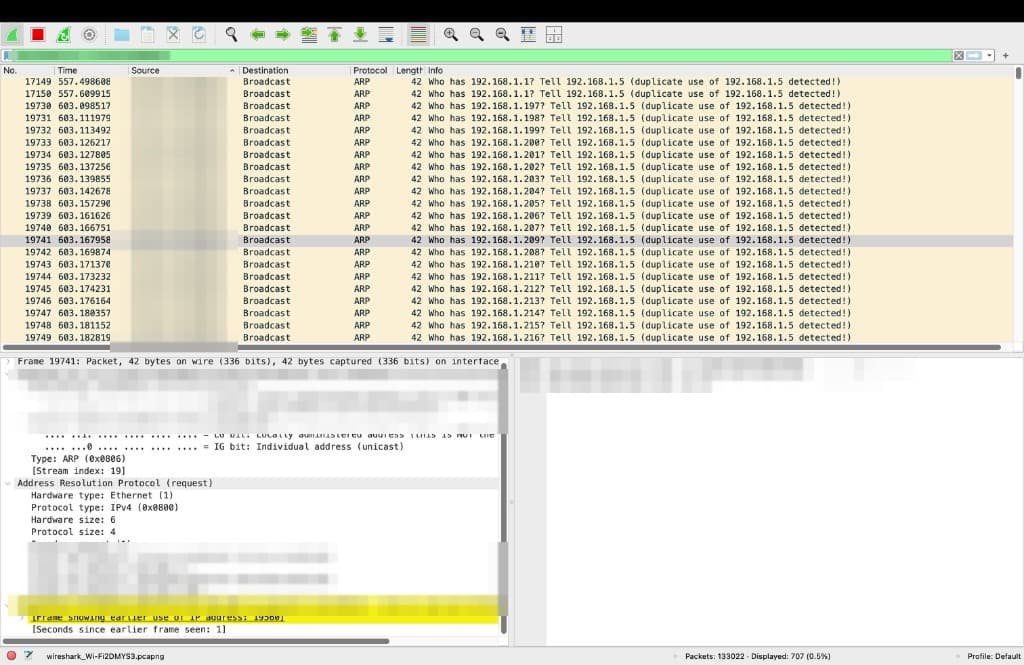
Observation: Wireshark recorded a massive volume of broadcast ARP requests generated by the extender:
Source: 12:3e:cc:ba:**:**
Info: Who has 192.168.1.X? Tell 192.168.1.5*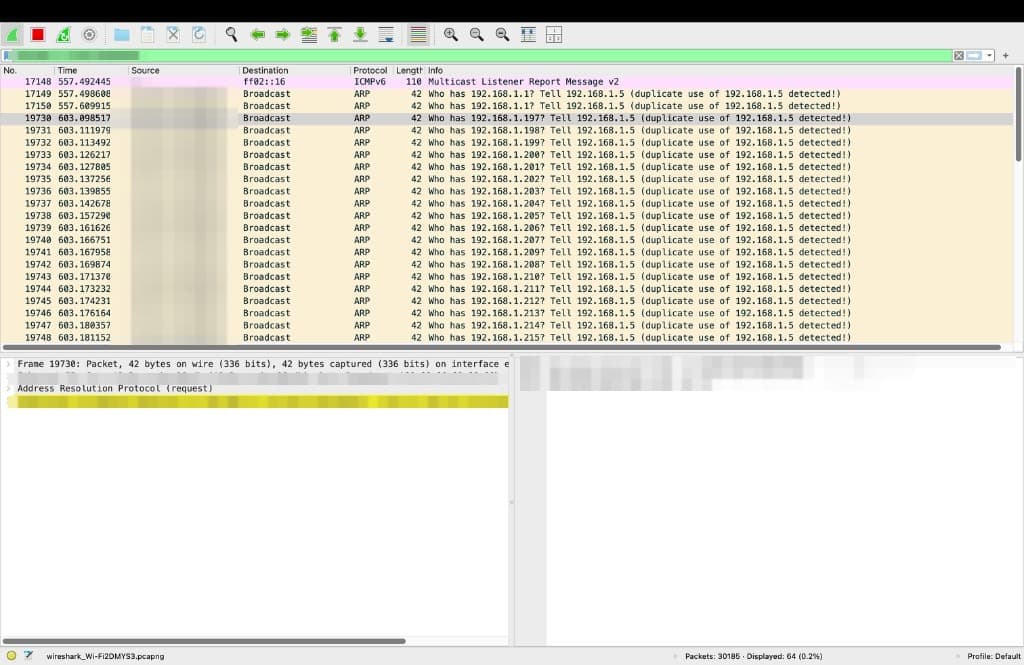
Step 3: Specific ARP source filtering and detail analysis
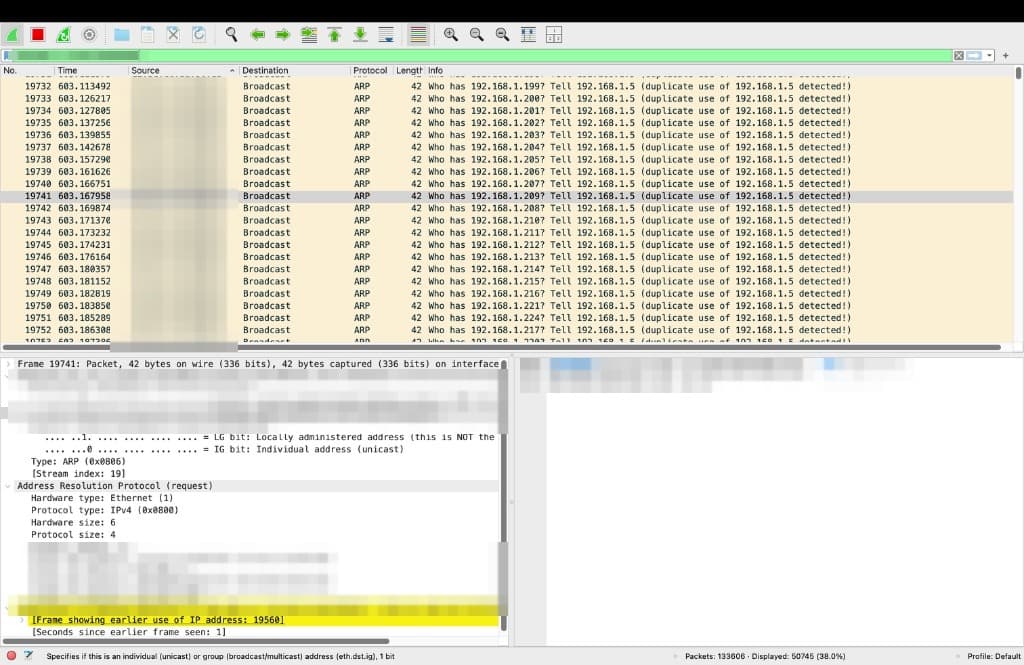
To isolate outbound ARP broadcasts strictly from the extender's interface: arp and eth.src == 12:3e:cc:ba:**:**. This looks only at ARP announcements sent out by the repeater, catching the exact moment it claims ownership of the conflicting 192.168.1.5* address.
Observation: the extender was actively broadcasting to every address in the subnet (.197, .198, .201, etc.), asserting that MAC address 12:3e:cc:ba:**:** owned IP 192.168.1.5*. At the same time, the capture history showed the analyst's workstation (fe:47:d1:14:**:**) claiming that exact same IP address.
Step 4: Expert Information diagnostic confirmation
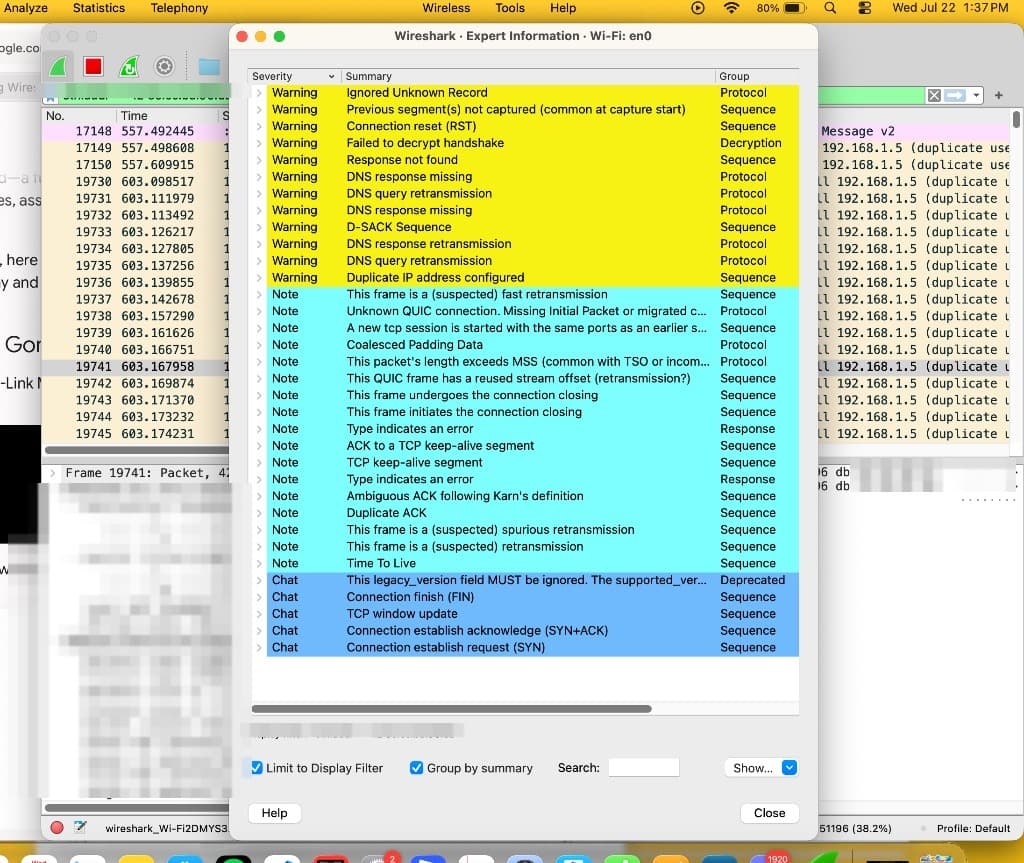
Opening Wireshark's Expert Information window (Analyze → Expert Information) confirmed the flaw:
- Severity: Warning
- Group: Sequence
- Protocol: ARP / IPv4
Duplicate IP address detected for 192.168.1.5* (12:3e:cc:ba:**:**)
also in use by fe:47:d1:14:**:** (frame 19560)
Additional errors generated by this state included:
- DNS query retransmission: DNS requests dropping due to routing ambiguity.
- DNS response missing: gateway responses delivered to the incorrect hardware interface.
- Connection reset (
[RST]): abrupt TCP socket termination.
6. Remediation Strategy
Since the PLDT gateway's internal DHCP lease table was corrupted with conflicting binding entries, a software-only release was insufficient, so a full physical power-cycle sequence was implemented to clear volatile memory on every network node.
Solution: unplug it, then plug it back in
- Complete power disconnection: unplugged the primary PLDT FiberHome router and the primary room repeater ("Alien") from their sockets at the same time.
- Capacitor discharge period: kept both devices unpowered for 30 seconds to fully wipe internal ARP tables and DHCP binding states.
- Sequential boot sequence: re-powered the PLDT router first, allowing 2 minutes for WAN sync and DHCP initialization, then re-powered the primary room repeater ("Alien") and let it auto-associate with the gateway.
7. Post-Fix Verification and Key Takeaways
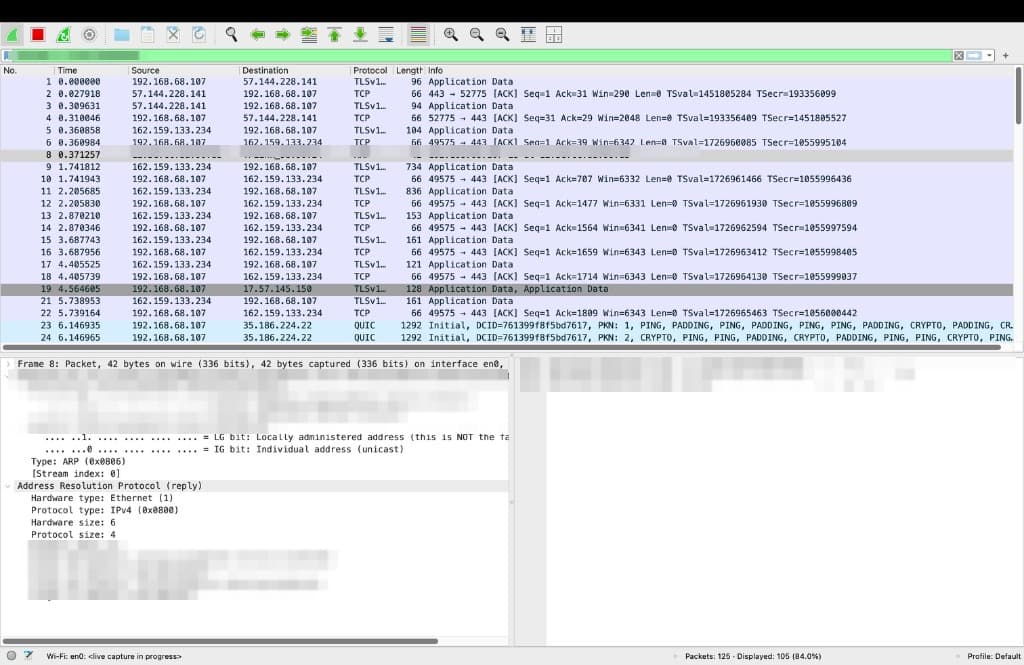
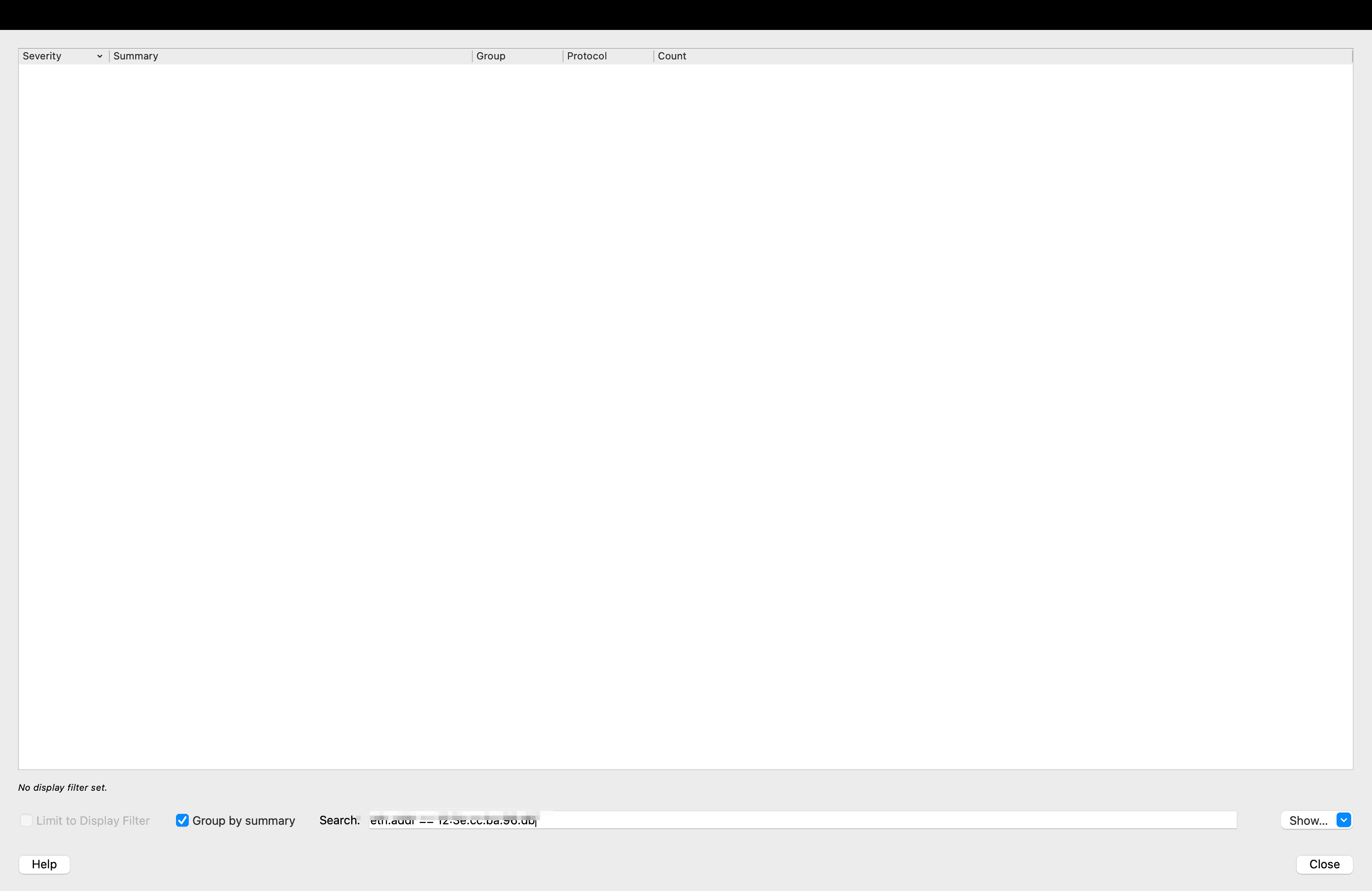
A fresh live capture was started after the power-cycle, reapplying the hardware filter to check live bridge behavior: eth.addr == 12:3e:cc:ba:**:**
Results
- Clean IP re-assignment: the extender requested and received a clean, unique IP (
192.168.68.107*) from gateway192.168.68.1*. - Zero duplicate IP warnings: the Expert Info alerts vanished completely.
- Protocol normalization: traffic shifted cleanly to standard encrypted protocols (TLSv1.3, TCP, QUIC) without packet loss.
- Hardware status: the upper living room extender returned to its normal white/blue status LED, confirming an active backhaul link. Every client regained stable internet immediately.
Documented Wireshark commands reference
ip.dst == 192.168.1.5*ip.addr == 192.168.1.1*eth.addr == 12:3e:cc:ba:**:**arp and eth.src == 12:3e:cc:ba:**:**dns| Filter command | Purpose | Finding / result |
|---|---|---|
ip.dst == 192.168.1.5* | Inspects inbound traffic targeting the workstation | Revealed TCP resets and dropped ACKs |
ip.addr == 192.168.1.1* | Monitors bi-directional traffic with the default gateway | Confirmed baseline gateway ICMP status |
eth.addr == 12:3e:cc:ba:**:** | Filters all frames involving the TP-Link MAC address | Isolated extender behavior from general noise |
arp and eth.src == 12:3e:cc:ba:**:** | Filters ARP requests specifically sent by the extender | Uncovered continuous ARP broadcasts claiming .5* |
dns | Scans for Domain Name System queries | Identified dropped lookups during the outage |
Key Takeaways
- How extender conflicts cause outages. Wi-Fi extenders pass traffic back and forth to the main router. If an extender accidentally claims the same IP address as a laptop or phone, the router gets confused and cuts off internet access for every device connected through that extender.
- Looking beyond warning lights. A red blinking light on a repeater only tells you the connection is broken, not why. Packet analysis tools like Wireshark let you look under the hood to find the actual root cause.
- How a healthy extender behaves. A working extender acts like a silent middleman: it passes traffic through without making extra noise on the network. Seeing very little direct background traffic from the repeater during active browsing is a sign it's working correctly.
- Why Wireshark mattered. PCAP tools like Wireshark made it possible to look deep into the packets and traffic behind this case, rather than guessing from symptoms alone.
end of report